Beast Breaker Steam Launch - and 5 Behind-the-Scenes Facts!
It’s finally here!
BEAST BREAKER IS OUT ON STEAM TODAY!
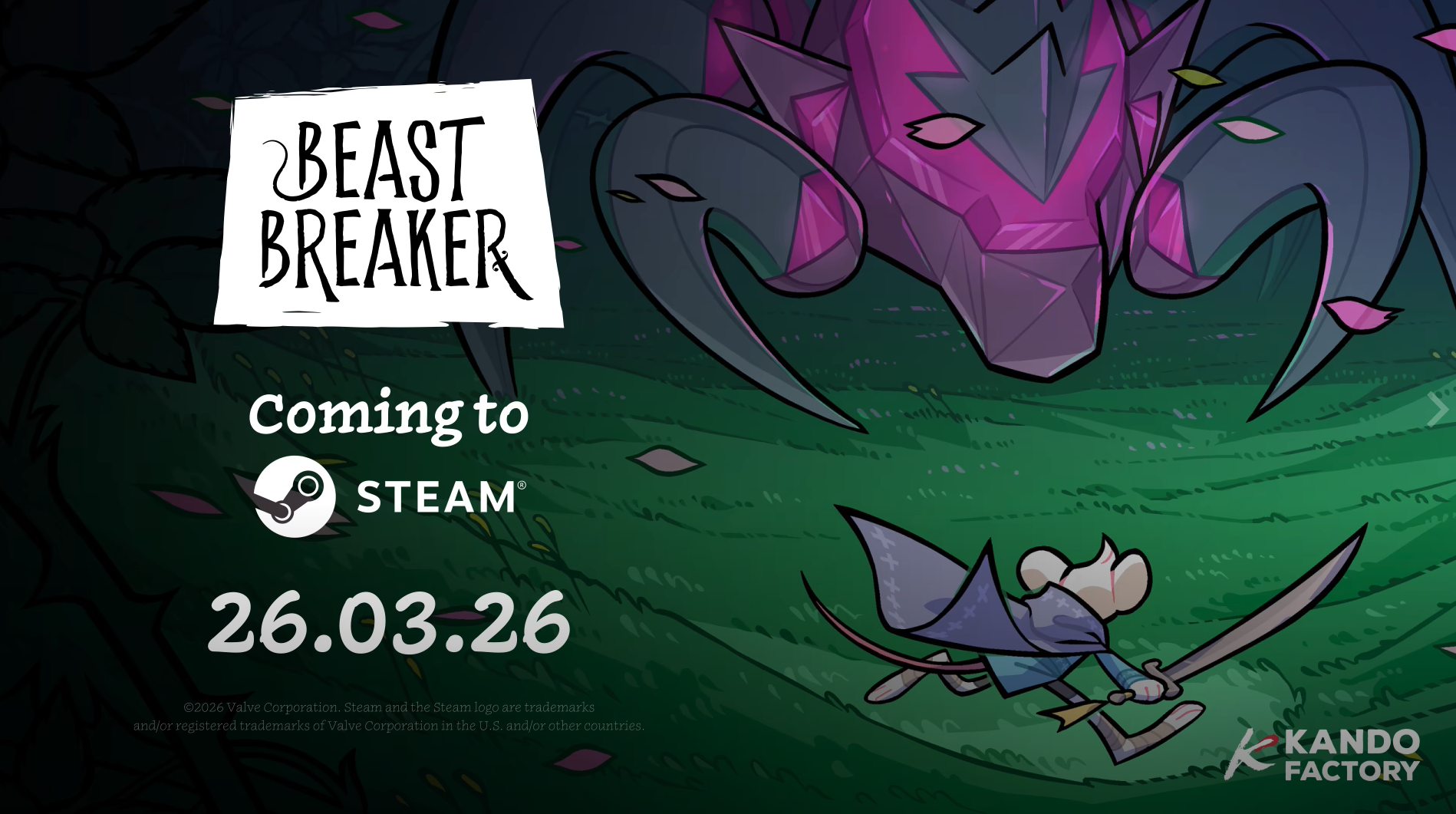
It’s been a long journey from the game’s initial release on Switch and Epic Games Store in 2021 to the Steam release today, five years later. So, in honor of those five years…
Here are 5 Behind-the-Scenes Facts about Beast Breaker!
Read on for glimpses of concept art, insights into the game’s development, and a few fun teasers. (But don’t worry – I’ve kept this spoiler-free for those of you who haven’t played before! Nothing below will reveal more than what’s in our trailers and promotional materials.)
Now don your beastly armor and dive in with me, as I take you back to when…
1. Beast Breaker Was Briefly A Mobile Card Game
Ah, indie game development! Are you even making a game if it doesn’t change 50 times before launch?
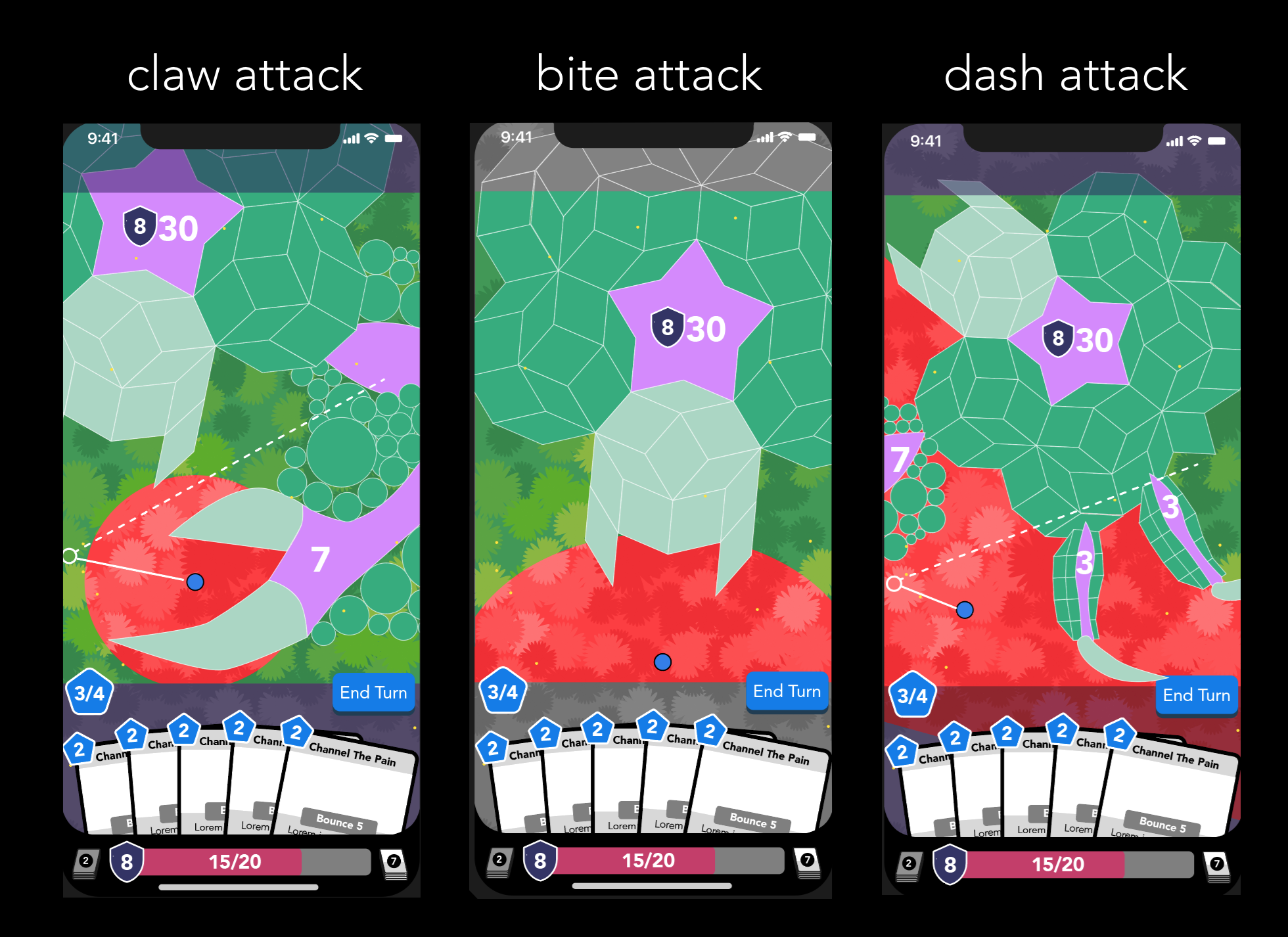
It’s hard to imagine now, but there was a time when a Steam release would never have been on the radar, because Beast Breaker was envisioned as a mobile-first experience! Instead of planning out your perfect ricochet route, you’d have selected each action from a virtual card deck inspired by games like Slay the Spire. Fortunately, this was quickly replaced by the dynamic mouse-bouncing mechanics that we have today, and this old version faded into distant memory.
But these ancient artifacts don’t actually show the oldest prototypes of Beast Breaker – all screenshots of earlier versions have long since been lost to time.
Which is too bad, because those screenshots contain…
2. The Reason that Skipper is a Mouse
In the screenshots above, the player character is represented by a simple dot – but it wasn’t always that way. In one of the very first prototypes of Beast Breaker, Asher stuck in a default icon of a mouse to quickly represent the idea of “tiny hero, BIG monster.” It may have been a momentary whim – but it captured our imaginations. After that, playing as a boring dot or even a classic human hero just didn’t hold the same appeal!
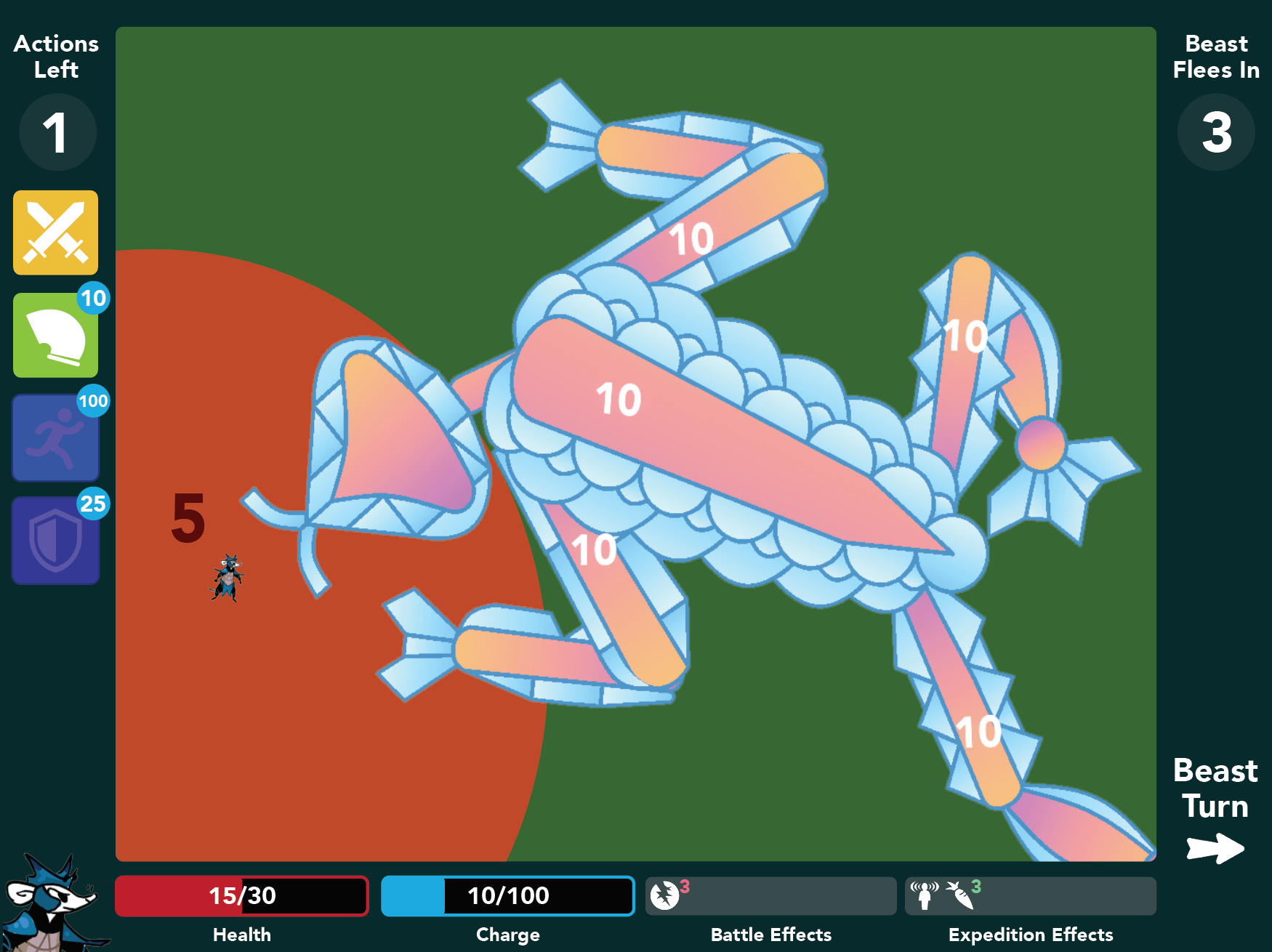
The concept of a tiny, simple mouse facing off against a huge, unnatural Beast just worked so well to convey the feeling that we wanted the game to embody, of choosing to stand against an enormous threat that is so, so much bigger than yourself...
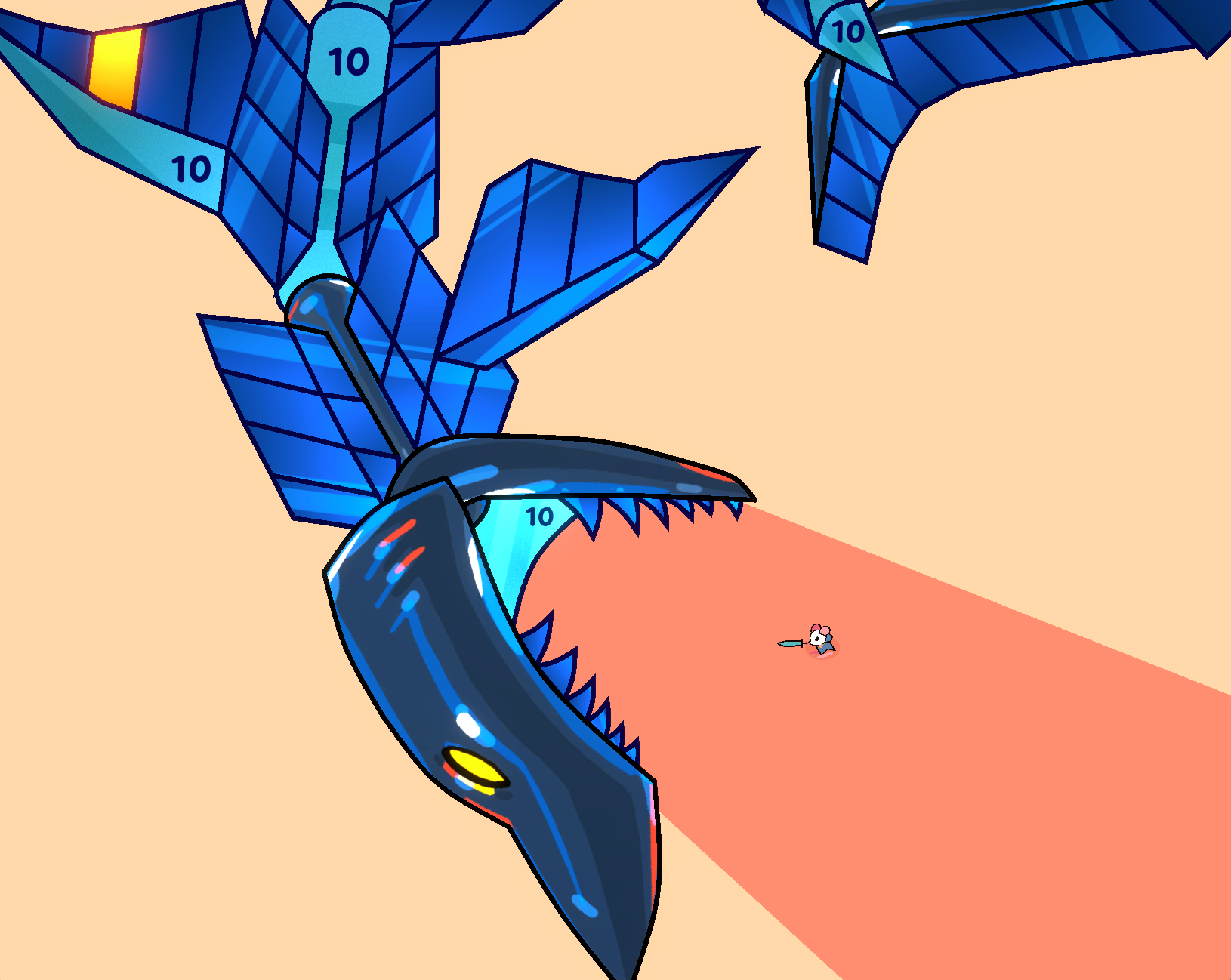
That contrasting size difference became one of our key guiding principles as we built out the world and characters, and we emphasized it however we could.
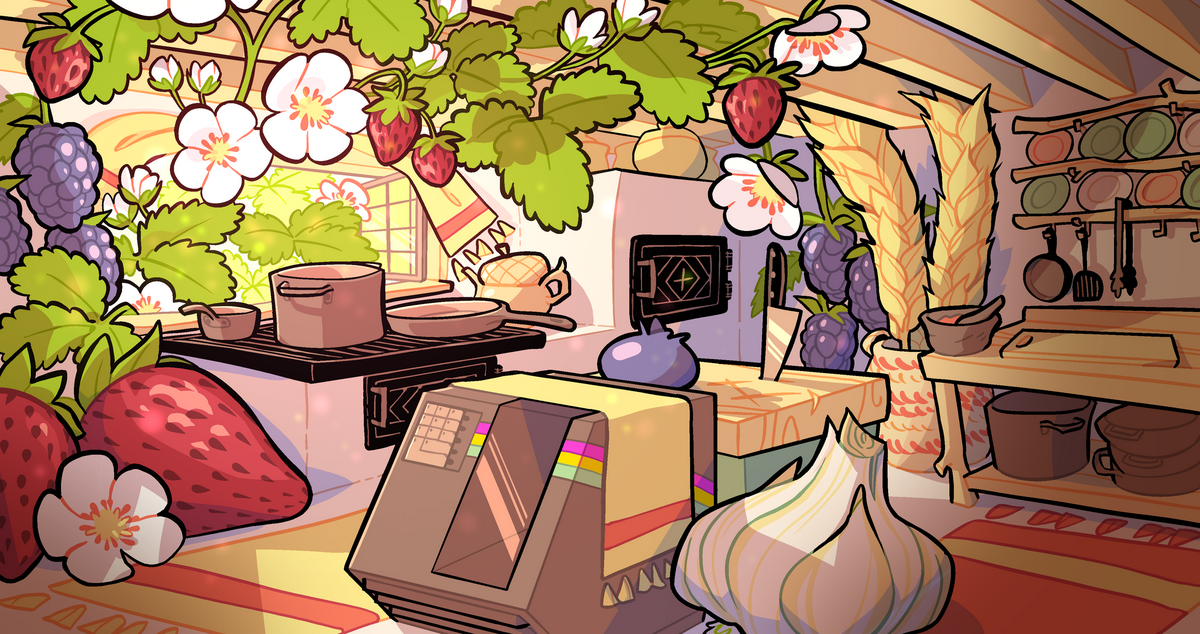
We decided that all the plants referenced in the art, in dialogue, and in character names had to be shrub-sized or smaller. (“TREES ARE ILLEGAL!” was a frequent rallying cry.) Human measurements of time were carefully considered for their implications about our tiny protagonist’s lifespan. (“Just a minute” was fine; “three years ago” was not.) And our entire world became populated by small woodland creatures, with the strict rule that none could be larger than a cat.
We had another important rule for our cast, too:
3. Sentient Species Are All Just “Critters”
We knew that we wanted every character to be based on a different animal, in order to have a dynamic and diverse cast… but we also wanted to choose each animal based on what best suited the CHARACTER, not based on any kind of species determinism.
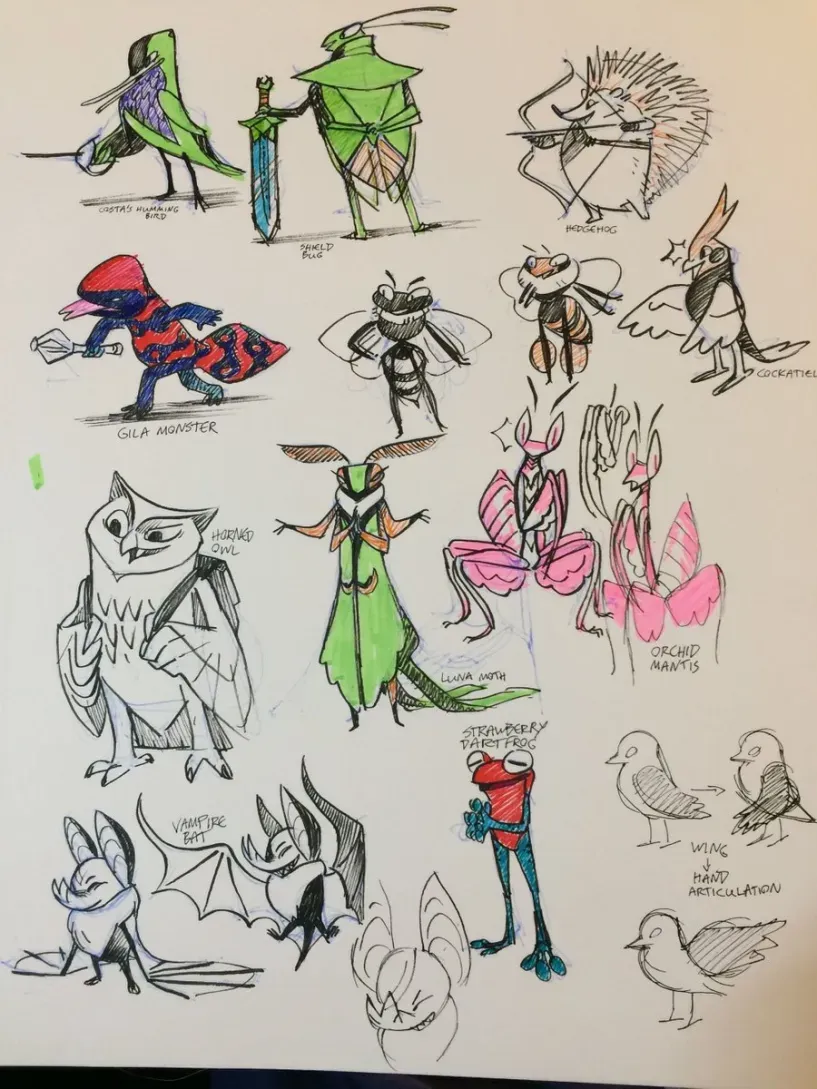
We wanted Skipper to be a mouse to emphasize their size contrast with the Beasts, to evoke a skittering feeling as they zoomed around the screen, and to make them a common, easily-relatable cute animal. We wanted Granny to be a rat because it associated her with her grandchild while making her seem tougher, stronger, and more savvy about the world. (Plus, since I had many beloved pet rats growing up, I’ve always been determined to redeem their bad reputation!)
But we didn’t want to create a world where, for example, all mice were peasants and all lizards were nobles (or even “all mammals” versus “all reptiles”). It was really important to us that species and anatomy would have no bearing on class, occupation, etc. Additionally, we wanted multiple members of Skipper’s family to be represented by similar-but-different species of animal while still being directly related, in a way that wouldn’t be possible in real life.
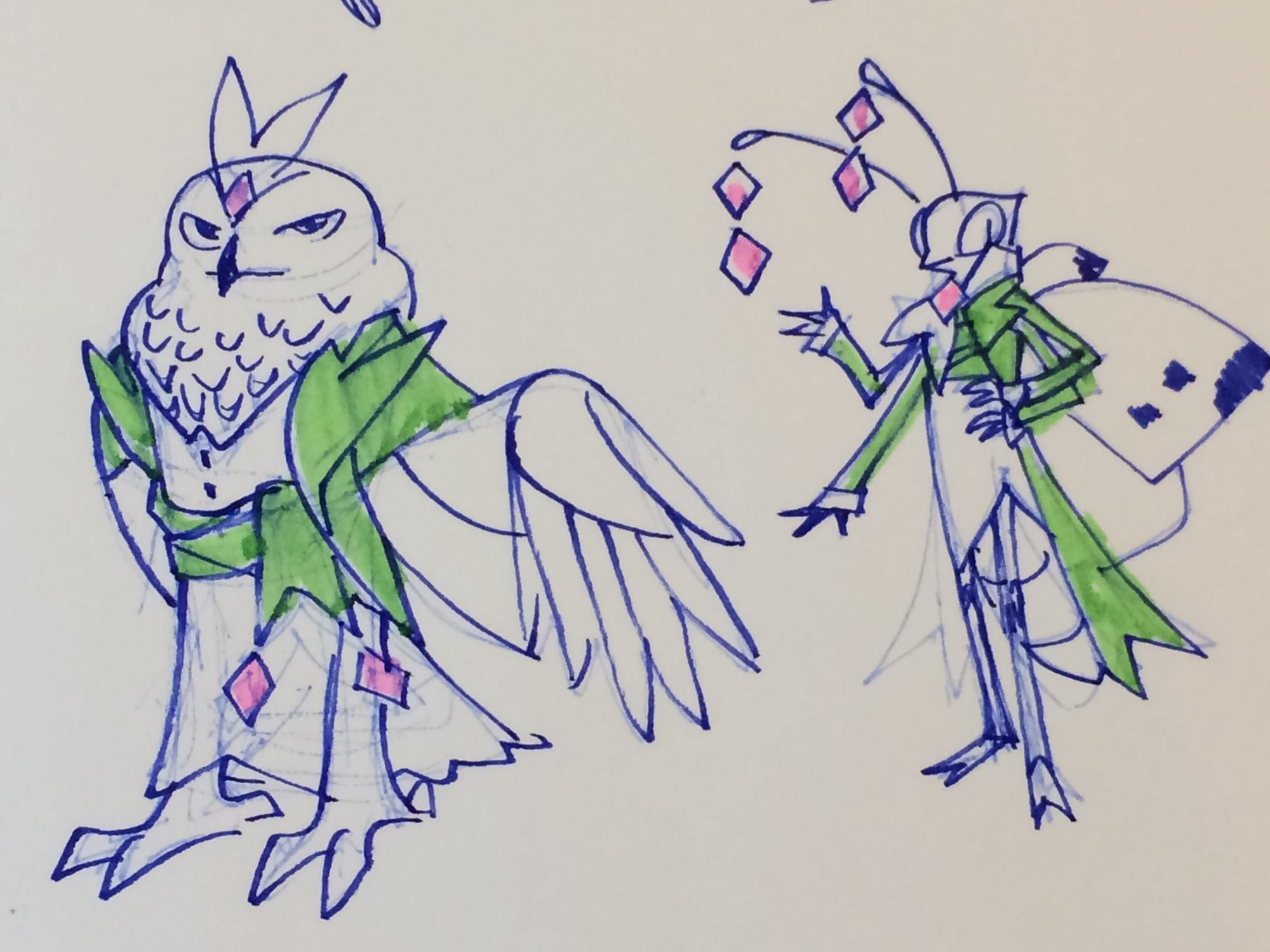
Our solution was to decide that the sentient characters are all called “critters,” with no in-game mentions of the different species that they were based on. Anatomy like whiskers and wings could be referenced, the same way that we might reference someone’s curly hair or blue eyes – but just as we are all humans, our characters would all be critters, not mice or rodents or mammals.
There’s a fun exception, though – for non-sentient species, such as a bug that is kept as a pet, the names of the species are used directly. Keep an eye out for these references as you play the game!
Ah, yes – playing the game. Let’s talk about the influence of game mechanics on character design!
4. Character = Mechanics + Theme
Much of the concept art above showcases Jemma’s amazing work on Beast Breaker’s visual development for the characters, which was an ongoing process from the beginning… but how about the writing development?
I am often a theme-first writer, and Beast Breaker was no exception – the very first story beat that we discussed was the ending of the game, and all the other plot details unfolded from there. When I write prose, I usually take an approach that treats character and plot as two sides of the same coin… but when I write for games, there’s an additional factor!
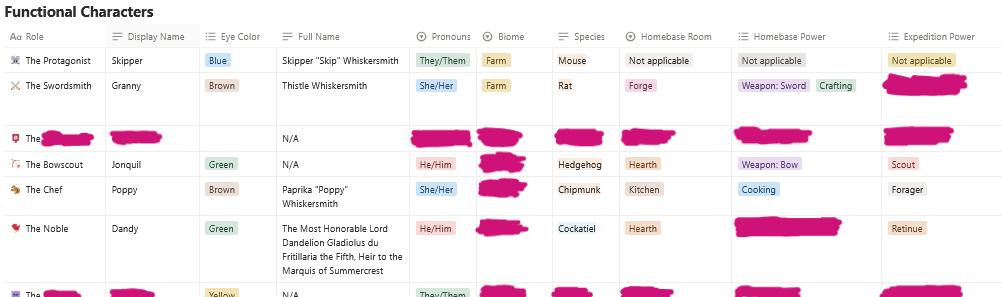
Before thinking of a single personality trait or heartfelt relationship, I assembled a spreadsheet. Our awesome designers, Chris and Asher, listed out all of the game features that needed to be unlocked, as well as the separately-brainstormed powers for the tracking minigame, and we began pairing them together, moving the lists around until we had game mechanic builds that made sense to us. (Of course, not every power made it into the final version of the game… But that’s a story for another post!)
Once we were happy with the combinations of the mechanics, I paired each of those with a big-picture thematic role that I felt would serve our story’s goals, and wrote out notes about how each specific arc would let us explore Beast Breaker’s broader themes. At last, it was time for us to delve into Jemma's delightful character concept art and finalize the fun details as a team, like species inspirations and character names, while I wrote up voice docs and plot outlines!
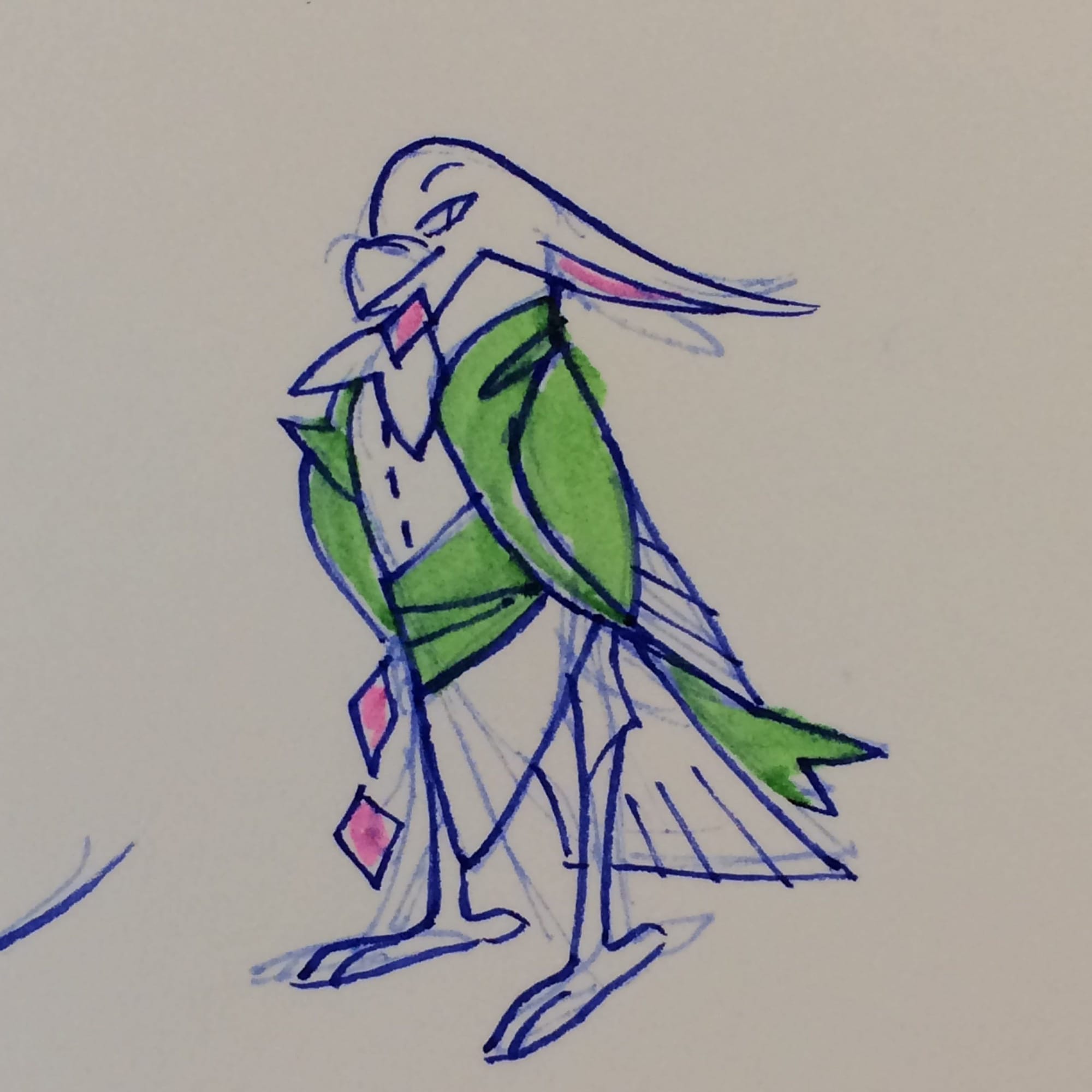
Each individual character’s development had their own twists and turns along the way, of course… but I’ll wait until the Steam release has been out for a while before delving into those juicy spoilers.
In the meantime, let’s finish this list with something that didn’t start as a spoiler at all!
5. Granny’s Backstory Was Originally in the First Cutscene
One of the very first characters who you’ll meet in the game is Skipper’s Granny, Thistle Whiskersmith, who crafts new weapons and armor for you – in addition to making sure that you survive your first Beast encounter.
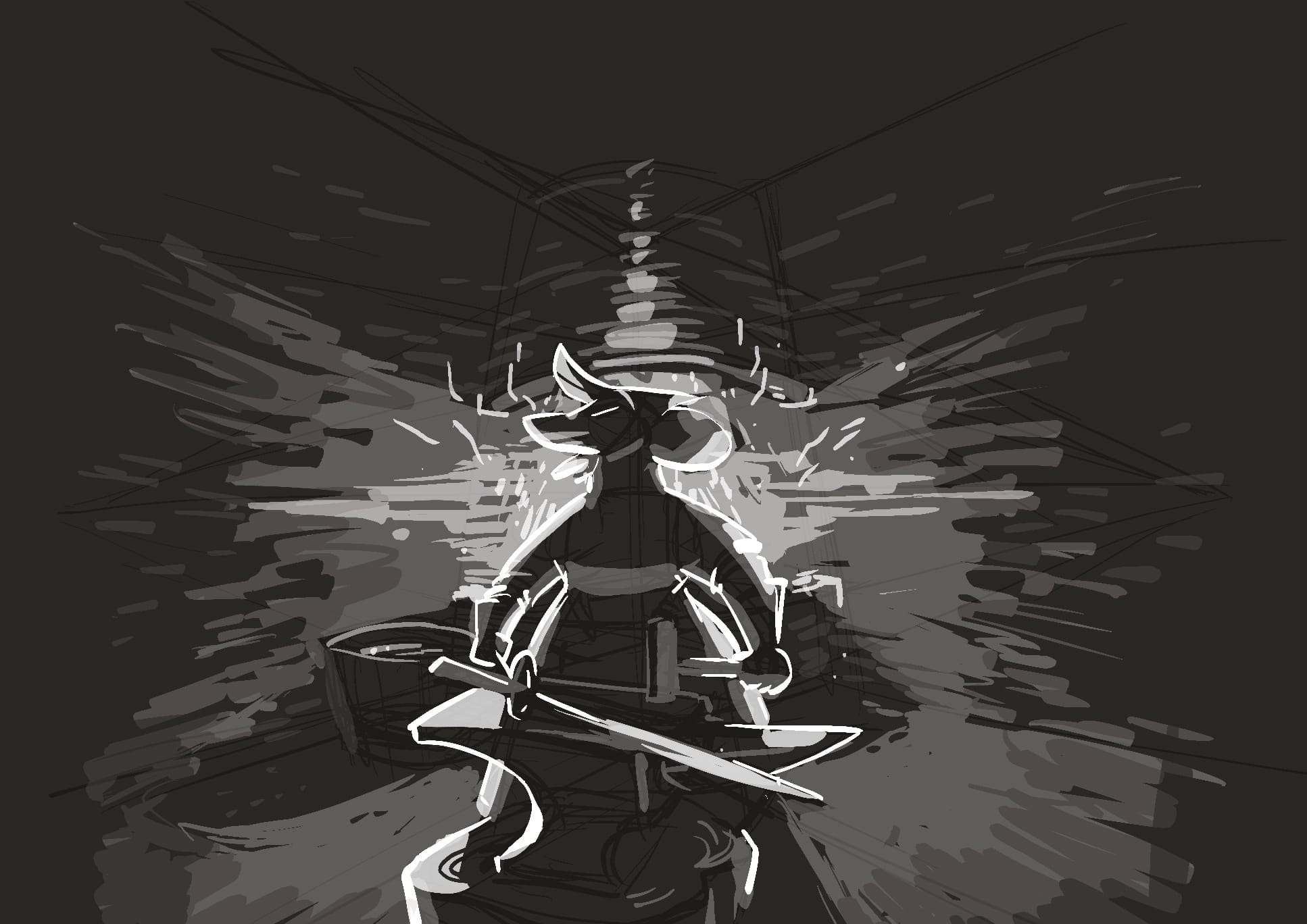
Granny has strong opinions about the fact that Skipper has taken her old sword and begun fighting the Beasts. But why does she feel so strongly? What’s the history of that weathered weapon… and why hasn’t she been using it?
Originally, you didn't have to wonder… Because my first draft of the opening cutscene focused on Granny specifically!
![A heavily-redacted script that reads: “One possible progression: Frame 1: A [REDACTED] natural world, brimming with [REDACTED]; Granny and [REDACTED] with other [REDACTED]”; “Frame 2: Flash-transition: Beasts [REDACTED]! Critters [REDACTED]!”; “Frames 3-5: We see a series of frames, one in [REDACTED], [REDACTED], and [REDACTED] - a giant Beast [REDACTED] and Granny [REDACTED] posed to [REDACTED] against [REDACTED] sword [REDACTED] But... As we cycle through each frame [REDACTED] not only are [REDACTED], but [REDACTED] from the [REDACTED] - the [REDACTED] are [REDACTED] and the [REDACTED] is [REDACTED]!”; “Frame 6: Granny, older than in the original frame and [REDACTED], [REDACTED] through [REDACTED] of [REDACTED] sword [REDACTED] the [REDACTED] is [REDACTED] - it is clear that [REDACTED]”; “Frames 7-8: The sword [VERY LONG REDACTED SECTION]”; “Frames 9-10: SUDDENLY, everything RATTLES - like there are booming footsteps outside - and we see Skipper bolt downstairs into the cellar to take shelter! Make it clear that this is the routine - this is how you hide from beasts.”](https://storage.ghost.io/c/af/75/af75c172-ab27-4e0b-a9c3-953e95089a1b/content/images/2026/03/BB-opening-cutscene-redacted.png)
Clearly, this was compelling stuff. (What, can’t you tell?)
However, we immediately decided that the only bit that we actually needed was the very end. It was a helpful exercise to work out the details of Granny’s past, but it wasn’t how Beast Breaker should begin. Skipper is the heart of this game, and they needed to be front-and-center from the first moment. In contrast, teasing out Granny’s past slowly over time would add a compelling plot hook. The icing on the cake was that a shorter cutscene would drastically reduce the scope of work involved, which was essential for a small team working on a tight deadline. Making the change was a no-brainer!
So what IS Granny’s backstory, exactly? Well… you’ll just have to play the game to find out!
Which you can go do RIGHT NOW! Especially because...
Beast Breaker is 20% Off Until April 9th!
I hope that you enjoy Beast Breaker on Steam! It’s 20% off until April 9th, so this is a great time to nab it - and if you prefer a handheld experience, it's verified to work on Steam Deck, too!
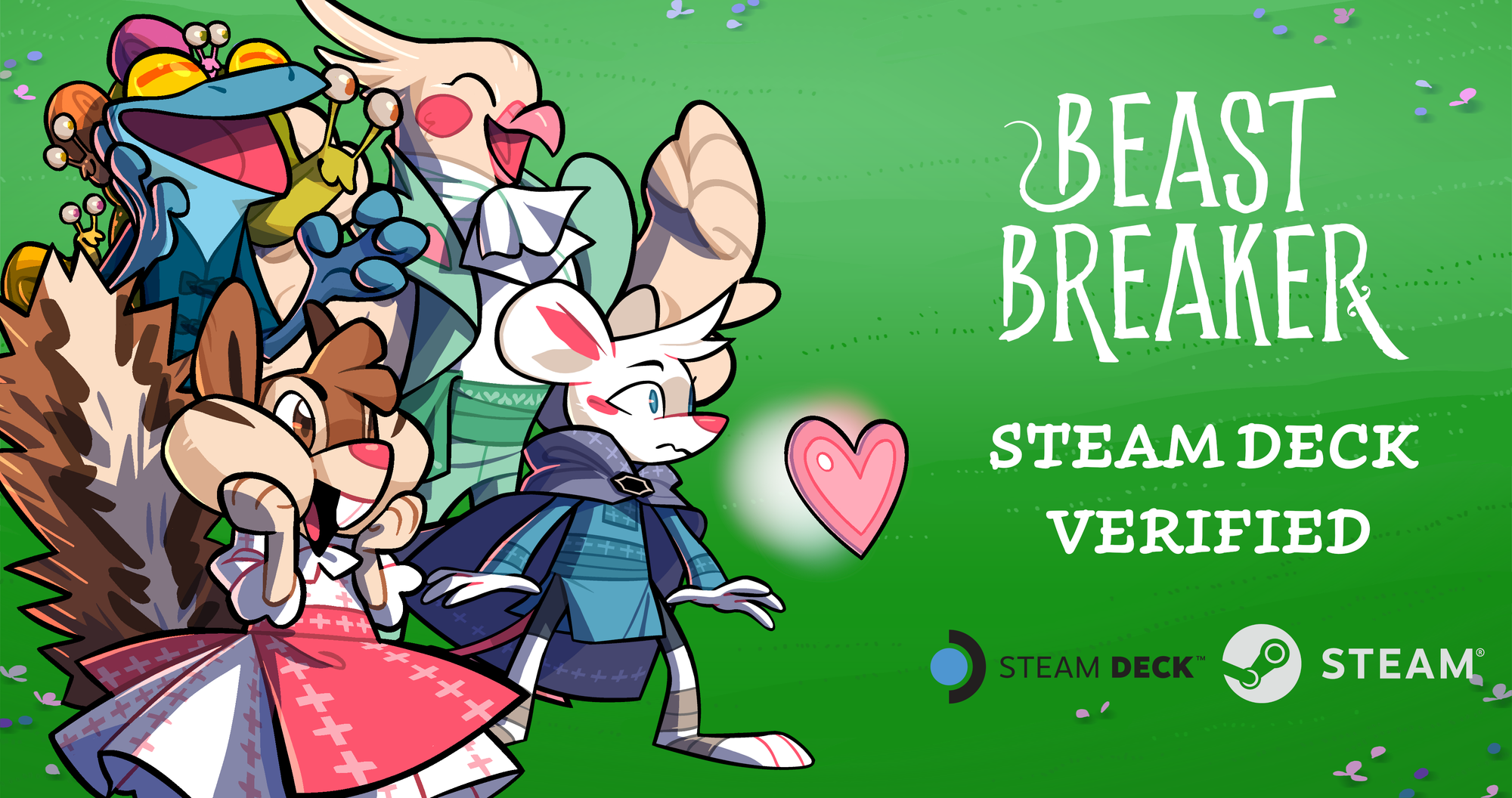
Every single purchase benefits everyone who worked on the game, so buying on Steam is the best way to support us – especially if you leave a review! It’s harder than ever for indie games to stand out from the crowd, and so sharing your words with us would mean the world.
(And for those of you who’ve already played the game on Switch and Epic Game Store – THANK YOU for your early support! Keep your eyes peeled for an update on those platforms in the coming weeks, containing plenty of bug fixes, script fixes, and even some early-game rebalancing!)
I hope that you enjoyed this glimpse into the behind-the-scenes development of Beast Breaker! I’d love to share more spoiler-filled details in future posts, so let me know if there are any writing topics that you’d like me to cover!
Take care!
Member discussion